

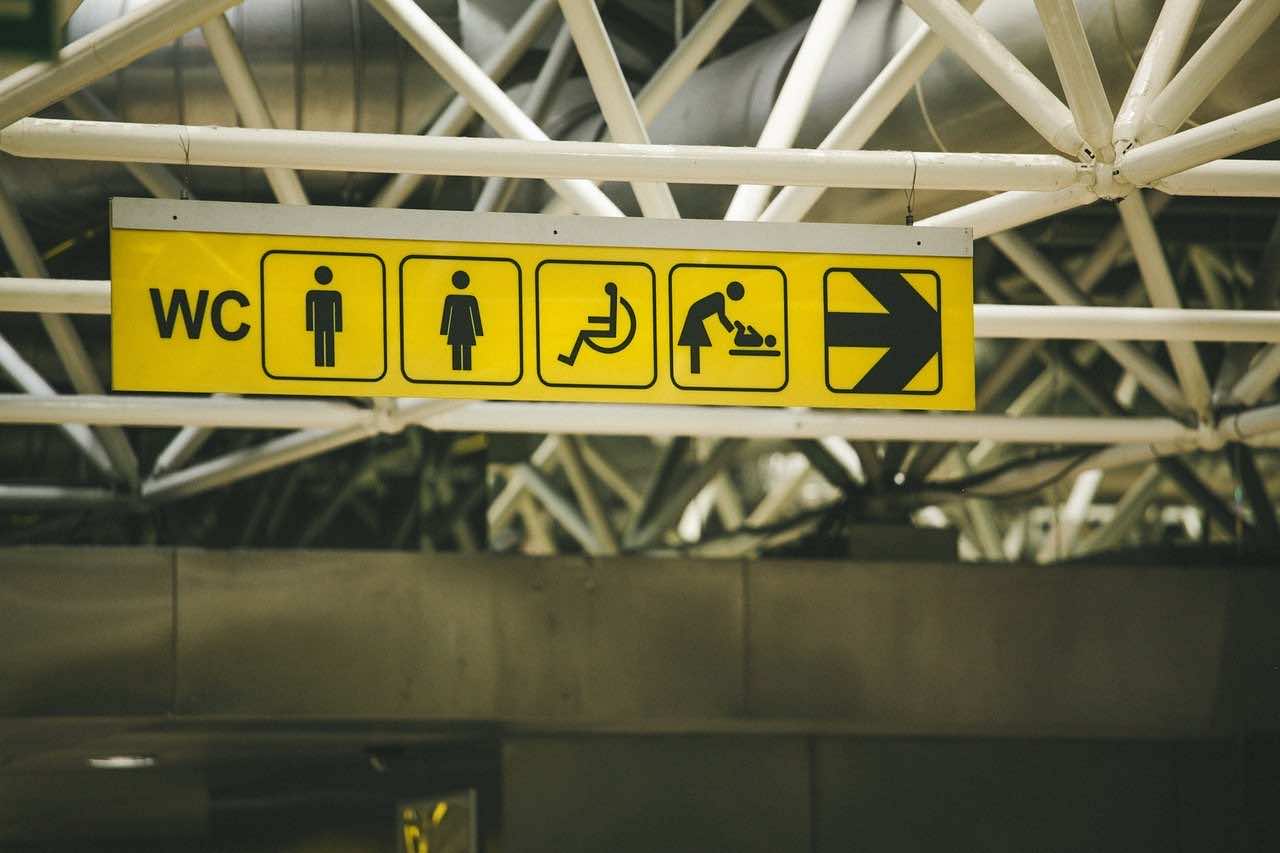
Public services constitute one of the cornerstones of the advancement of a given country leading most importantly to its reputation, and ultimately the satisfaction of its citizens. In addition to historical and tourist sites, peace, and security, among the things that attract tourists and visitors to countries and cities is the quality of the services available in them.
There is no doubt that the presence of clean hotels and restaurants, places of worship, parks, and entertainment places have a great impact on the minds of tourists or visitors in Morocco. Public services have a great impact on tourists, as well, namely infrastructure, means of transportation and communication, and even public toilets.
Modern and sanitary public toilets are necessary facilities that give Moroccan cities an added value in terms of the services provided and maintain the country’s reputation and standing.
Current situation of public toilets in Morocco
Amid the current COVID-19 pandemic and the hygiene discussion it has provoked, it is necessary and vital to consider all factors at hand in the spread of the virus and establish suitable conditions of hygiene and health safety.
There is no doubt also that the repulsive phenomenon of urinating on walls and in dark corners between Moroccan alleys not only harms the beauty and cleanliness of cities but has undoubtedly become a threat to the safety of citizens, not to mention giving Morocco a bad reputation in general.
The absence of sanitary public toilets in Morocco is worrying, especially for the elderly, women, or medical patients. It is a shame that they are still searching for toilets in cafes or mosques.
In an essay titled “The absence of public toilets that haunts visitors and embarrasses the city council in the capital,” Moroccan academic Youssef Lakhdar states that Rabat still lacks modern public toilets despite being one of the largest and most densely populated Moroccan cities, in terms of its own population and visitors.
Public toilets are one of the facilities and services that determine the attractiveness of a city, but the Moroccan government has not mobilized to improve the hygiene situation of the capital even as it nears the end of the “Rabat City of Lights” modernization project.
If this is the case in the capital city, then what can we say about Casablanca, the economic capital, Marrakech with its ever-bustling square, Agadir, Fez, Tangier, Laayoune, and Dakhla?
Moreover, what can we say about all the rest of Moroccan cities, big and small, and rural villages? What is the percentage of the available public toilets even in the most prestigious streets of those cities? Is it not a shame that one wanders with his family and does not find a public toilet to fulfill his or his children’s needs in a private, safe, and clean place?
The impact of insufficient public toilets on society
Most studies and research that have tackled this topic indicate that the number of toilets located in all Moroccan cities remains small compared to other available services and facilities and given the number of residents, tourists, and visitors.
Existing public toilets often fail to meet even the lowest and simplest standards of hygiene and safety, marked by worn-out pipes, broken floor tiles and faucets, half-broken doors, broken locks, broken and rusted latches, and graffiti and obscene words that are written or carved on the walls and interior doors. The current situation is indeed a catastrophe.
Some Moroccans question the lack of projects to improve this aspect of public life in cities and villages.
Is the absence and weakness of public toilets in Morocco due to cultural conceptions that may consider the issue “taboo,” and thus its files remain locked on the shelves? Or is it merely indifference and prioritizing other sectors?
We must inquire about the role of municipal councils and the elected political bodies responsible for urban planning. We should question the hygiene delay in light of the great ambition to make major cities such as Casablanca a global financial and economic powerhouse and Rabat a cultural capital.
There is no doubt, then, that the meager number of public toilets in cities such as Casablanca, Rabat, Agadir, Tangier, Fez, Dakhla, and Marrakech is due to the absence of a clearly defined public policy, as well as the lack of interest of the locally elected in this matter. Additionally, the frequent circulation of political parties on urban development issues means whenever a political team goes away, they withdraw with them city projects, plans, and ideas.
The Women’s Environment Association in Rabat reports that one out of every three people in Morocco do not have adequate toilets, 34% of rural residents lack sanitation, and 6,000 schools across the country suffer from the absence of hygienic essentials, which is considered a factor in school dropouts, especially among girls.
Recommendations for mitigating the strain on public health
The acute and striking shortage of the number of public toilets in all cities and villages negatively affects the reputation of those cities and villages alike.
For reference, there is a group of public toilets underground in Casablanca in the “Darb Omar” district, the “Royal Army Street,” and the “City Center”, which all seem to be outdated and completely neglected, as they were built during the era of the French protectorate over Morocco.
Some of them are now closed, while others have eroded walls and their doors have been broken. They are in a catastrophic state, to say the least. Still, some people are wondering how French colonialists were able to construct such facilities underground with amazing engineering and architecture.
Is it not right for us now that we are blessed with freedom and independence, and we have enough capabilities to build and construct better than that?
In the face of this great shortage of public toilets in Moroccan cities and villages, an “uncivilized” phenomenon has spread throughout the country: Urination and elimination in public places teeming with pedestrians.
Morocco’s ancient walls, gardens, buildings, and historical monuments are consequently suffering from the spread of harmful insects, foul smells, and pollution, contributing to the defacement of sites that are supposed to attract tourists.
Many civic associations, especially those that care about the environment, are demanding respectable public toilets for citizens and tourists that take into account the issue of access for people with special needs and those who suffer from physical disabilities.
If necessary, cities should impose a duty fee of one dirham, although people are invited to pay more if they wish, in order to maintain the toilets’ condition on a daily basis. Alternatively, we should not hesitate to assign this project to private companies to run as a business to ensure its maintenance, safety, and cleanliness.
Since we are nearing the threshold of emerging safely from the COVID-19 pandemic, we must take into account the health of citizens and tourists as well to prevent diseases that may be transmitted to others.
Since the national COVID-19 response fund is primarily concerned with the health of individuals, Moroccan officials should pay attention to the issue of public toilets, especially as it concerns the health and safety of citizens and tourists, as well as the country’s global reputation.
Source : moroccoworldnews.com